
2. (核对问题答案,提取重点句型。)
T: Who can answer the first question?
S1: I can. They meet at the school gate.
T: Well done. What about the answer to Question 2?
S2: Helen usually comes to school by subway.
T: Good. Next question?
S3: Jane always comes to school by bus.
T: Good job.
Step 3 Consolidation 第三步 巩固(时间:5分钟)
1. (让学生听1a的录音, 回答下列问题。)
(板书)
|
Where do Kangkang, Jane and Helen meet? How does Helen usually come to school? How does Jane usually come to school? |
T: Now, let’s listen to the tape and find out the answers to these questions. Are you ready?
Ss: Yes.
T: OK, let’s begin.
(播放录音。)
5. (询问两名学生的上学方式,并示范汇报结果。)
(板书)
|
Do you often come to school by bike? Yes, I do. / No, I don’t. usually通常, always 总是 |
T: I often come to school by bike.
Do you often come to school by bike?
S1: Yes, I do.
T: S2, do you usually come to school by bus?
S2: No, I don’t. I usually come to school on foot.
T: Good. S1 often comes to school by bike.
S2 usually comes to school on foot.
OK. Work in four to practice like that. Please remember to report to your group.
Step 2 Presentation 第二步 呈现(时间:10分钟)
4. (由上图引出一些表示交通方式的短语, 为下一步的学习做准备。)
T: I usually come to school by bike. What’s the meaning of“by bike”in Chinese?
S1: 骑自行车。
T: Very smart. Do you know how to say“乘公共汽车”in English?
S2: By bus.
T: Good. What about“乘飞机”?
S3: By plane.
…
T: Who can say“步行”in English?
S1: By foot.
T: Do you agree with him/her?
Ss: No, on foot.
T: Right. We shouldn’t say“by foot”. We should say“on foot”. Do you remember?
Ss: Yes, we do.
T: Good. Please read these phrases by yourselves. Let’s begin.
(板书)
|
by bus, by car, on foot by bike, by boat, by plane |
3. (用事先准备好的模型、教学图片或用简笔画给学生展示一些交通工具的名词,如下图。)
 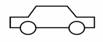    
|
T: Boys and girls, please look at these pictures. Do you know what they are in English?
S1: I know the second one. It’s a car.
T: Good. Next one? One by one, please.
S2: The first one. It’s a bus.
T: Good. What about the third one?
S3: Foot.
…
T: Well done. Read these words by yourselves. If you can’t read any words, I can help you.
Now let’s begin.
2. (复习上学期的时间表达法,并由此导入本课重点:交通方式。)
T: Who has a watch, everybody?
S1: I have.
T: What time is it? / What’s the time?
S1: It’s seven o’clock.
T: Oh, it’s time for work. I usually go to work by bike.
Step 1 Review 第一步 复习(时间:10分钟)
1. (师生互相问好, 复习旧的问候语。)
T: Good morning, everyone!
Ss: Good morning, madam/sir!
T: Welcome back to school, boys and girls. I’m very glad to see you again.
Ss: Me, too.
(找一名学生协助呈现新问候语“Happy New Year!”的答语。)
T: Happy New Year!
S1: Happy New Year!
(让一名学生问候教师新年好,教师引出答语“The same to you!”。)
S1: Happy New Year!
T: The same to you!
(板书)
|
Happy
New Year! 新年好! The same to you! 你也一样(新年好!) |
录音机/交通工具的模型/图片/多媒体课件
3. Talk about how to go to school:
-How do you usually come to school?
-I usually come to school by subway. / I always come to school by bus.
2. Learn the simple present tense:
-Do you often come to school by bike?
-Yes, I do. / No, I don’t.
湖北省互联网违法和不良信息举报平台 | 网上有害信息举报专区 | 电信诈骗举报专区 | 涉历史虚无主义有害信息举报专区 | 涉企侵权举报专区
违法和不良信息举报电话:027-86699610 举报邮箱:58377363@163.com