
3. 在设计图纸上配以简短的问题说明自己的设计思路,特别是表示位置关系的各种物品的位置。
2. 在看过很多漂亮的房间设计方案后,学生自己也会产生一定的想法。引导学生设计属于自己的房间。他们可以使用自己最喜欢的颜色,并放置学生最喜欢的家具。为了他们生活的方便和舒适,还可以发挥自己的想象力在自己的房间里增加许多设施。然后按照自己的设计思路画出房间的设计图纸,可以图上适当的颜色或是作出适当的标识。
1. 通过幻灯片向同学展示几种不同的设计风格,为了充分挖掘学生的英语潜力,我们希望学生用简短的句子、短语甚至单词谈谈他们的感受,喜欢的原因。Eg: I like the second picture because it is very bright and tidy.
2. Look at Tommy’s room for two minutes, then close the book and ask where the things are.
Girl: Where’s the math book?
Boy: It’s on the dresser.
Step two: Listen and circle the things Tommy wants from his room (Section 2a-2b)
|
The
thing(s) Tommy wants |
where |
|
1 |
|
|
2 |
|
|
3 |
|
|
4 |
|
|
5 |
|
Step Three: Imitate the dialogue
Step Four: Dialogue making. You need some things for the sporting meeting. But you leave them at home. Now you’re telephoning your mum and asking your mum to bring them to school.
Step Five: Listen to the tape and try to draw the missing things in the picture.(3a)
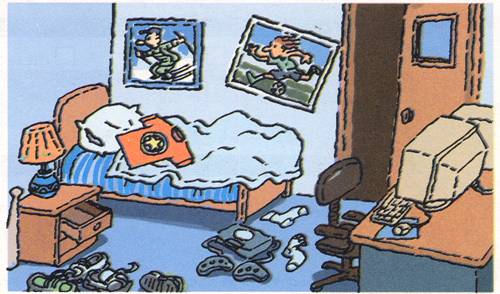

Step Six: Look at the picture and fill in the blanks(3b)
Step Seven: Group work. Four students a group. Two students try to make a dialogue between the child and the mum. The child is asking mum to get four things from your room. One student tries to write a note to mum according to their dialogue. And the fourth student tries to write another note as mum to tell the son to take the things to his sister.
Period Four:
|
Sub topic |
Describe the
room |
|
Language focus |
In, on, under, near |
|
Recycled language |
The book is on the table. The pens are in the pencil-case. |
|
Language Structure |
I like … There is/ are….in/ on/near… |
|
Tasks |
Comparing Problem solving & Sharing |
Step One: Here are some pictures of a bedroom. Which bedroom do you like best? Choose one and describe it. Let the students guess which bedroom you like .
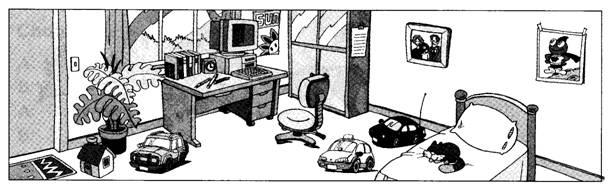

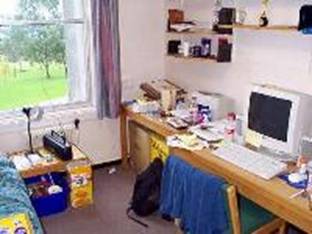
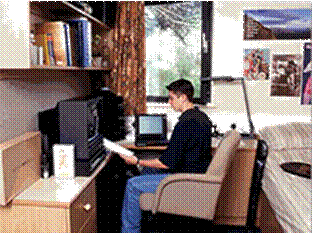
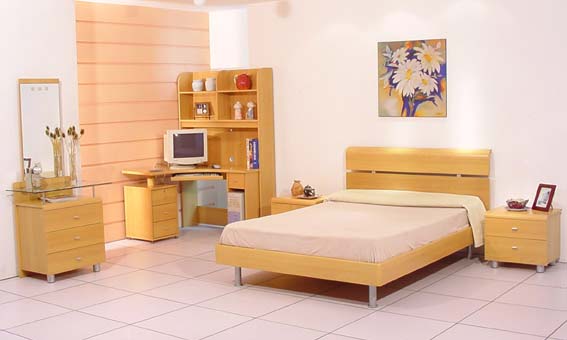
Step Two: Design your ideal room
What kind of room do you want to have ? Two students a group try to design a room. It may be your bedroom, your study, your living-room.
1. Match the words with the things in the picture( Section B 1a)
2.Listen and find where the things are .
Step Three: According to the dialogue, make a similar one.
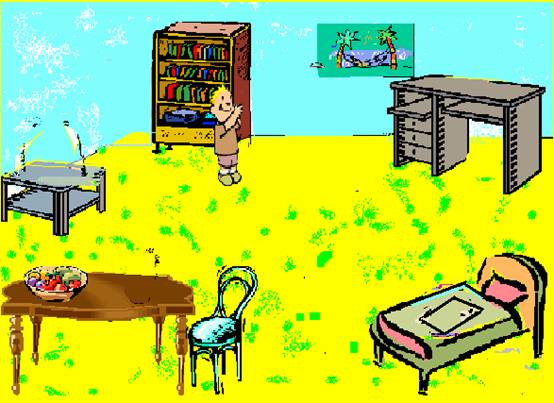
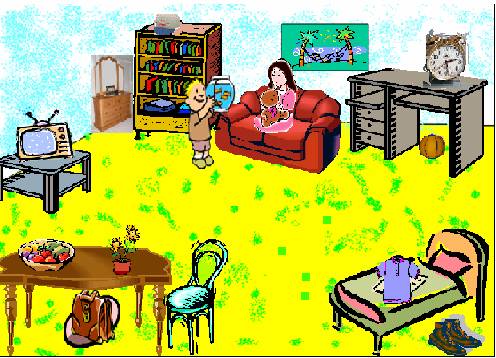
Step Four: Find the difference(Section A 4)
Show the students two pictures and let the students find the differences between the two pictures, using the patterns “In Picture One, the baseball is in under the table, but in Picture Two, the baseball is in the bag on the table”.
Step Five: Survey
Interview your classmate about his /her bedroom to see if his /her bedroom is tidy or untidy.
Example: A: Is there a desk in your room?
B: yes
A: Where is it?
Period Three
|
Sub Topic |
Asking for help |
|
Language focus |
take… to ; bring… to ; need |
|
Recycled language |
The book is on the table. The pens are in the pencil-case. |
|
Language structure |
I need … for… Can you bring some things to school? Please take these things to… |
|
Tasks |
Comparing Problem solving & sharing |
Step One Memory challenge between the boys and girls
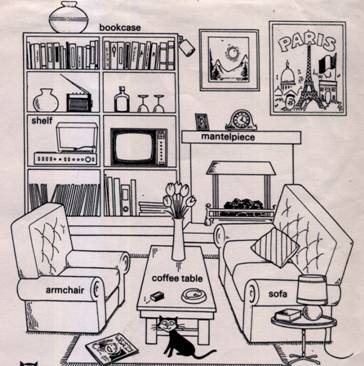
2. Show a picture of a living room, let the students guess where the things (like the clock, chair, books, plant, keys )may be in the living –room.
Step Two: 1.Listen and number the things you hear in Section A 2a
1. Chat about the places of the things in the classroom.
3. T : Where is my dictionary ?
S : It’s in the backpack.
B. Teacher gives the orders like “ put the books on the pencil-case./ put your pencil in the pencil-case.” etc, and students do the actions.
• C. Look for things.
The students hide and look for the things in groups. They can give the others
some clues. For example:
This is my book. It’s on the second desk.
(设计依据:通过设置让学生帮老师找东西这样一个真实的场景来导入新课,能够立刻调动学生的参与性,启动学习的发生。学生之间相互猜测能使他们的兴奋点持续下去。)
Step Five Pattern Drills
A: Where’s the plant?
B: It’s on the floor.
Step Six Give two students two pictures of a living room. One picture has more objects in it, but the other doesn’t. The student with Picture B tries to put the things in the right places by asking the student with Picutre A questions “Where’s the…” or “ Where’re the …?”
A
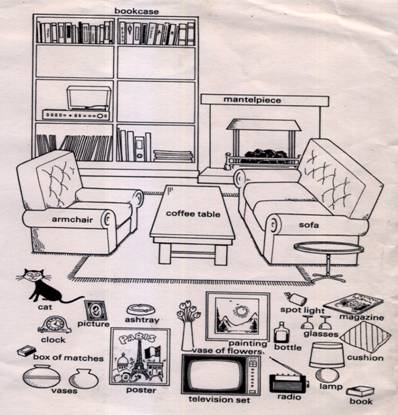
B
Period Two
|
Sub Topic |
Talk about the room Find the difference |
|
Language focus |
Talk about where the things are Tell the differences between two pictures |
|
Recycled language |
There is /are… Where is …? It’s on /in /under… Where are …? They’re in /on/under… |
|
Structure |
Is the book / Are the books on the desk? Yes,… / No,… / I don’t know. |
|
Tasks |
Listing Making a survey |
Step One Warming up
2. T : Where are my keys ?
S : They’re under your book.
湖北省互联网违法和不良信息举报平台 | 网上有害信息举报专区 | 电信诈骗举报专区 | 涉历史虚无主义有害信息举报专区 | 涉企侵权举报专区
违法和不良信息举报电话:027-86699610 举报邮箱:58377363@163.com