
1. (准备一些写有指令性动作的卡片,如go shopping,leave for Shanghai, fly to America等等,让一些同学来抽,抽到哪个指令就做一些相关动作,让其他同学猜,进行组与组间的评比。)
T: I have some cards here. There are some instructions on them. I’ll ask one student to choose a card and he should do an action according to the card he gets. Other students should guess what he is going to do. Now who is the volunteer and does the action here?
S1: (做动作)What am I going to do?
S2: You are going shopping. Am I right?
S1: Yes, you are right. / No, you are wrong.
S3: (做动作)What am I going to do?
S4: Are you going to …?
S3: Yes, I am. / No, I’m not.
4. (学生跟录音读,然后进行人机对话。)
T: Read after the tape. Suppose you are Wang Junfeng. Listen to the tape and make a dialog with it.
Step 3 Consolidation 第三步 巩固(时间:5分钟)
(在学生熟悉了对话内容的基础上进行分组对话练习,然后让每组分角色进行表演。)
T: Class, now let’s work in groups. Each group chooses six students to play a role in the dialog, then act the dialog out.
Step 4 Practice 第四步 练习(时间:10分钟)
3. (小组合作,找出1a的疑难点,板书,同时帮助学生掌握词组put out和ask for a ride,了解生词thumb, guidebook。)
(板书)
|
They are on their
way to airport. → on one’s way to I hope I won’t have any difficulty communicating. → have difficulty (in doing) |
2. (教师再放1a录音,让学生边听边在练习本中写下现在进行时表将来的句子。)
T: Listen to the tape again and write down the sentences that use present continuous to show the future.
(板书)
|
I’m flying to Disneyland. My uncle is meeting us tomorrow. |
1. (设置听力任务,让学生带着任务听1a录音,从整体上把握对话意思,并完成所列问题。)
T: Listen to the tape and find out where Wang Junfen is flying and answer the following questions.
|
When is his flight? What should Wang Junfeng do if he needs help? |
(师生一起核对答案,对错误答案先不纠正,要求学生再听一遍,找出问题关键进行对比,提高学生听力技能。)
5. (在熟悉现在进行时表将来的用法之后,两人一组对话操练。)
T: Pair work. Make dialogs with your partners according to the example in 1c.
Example:
A: When are you leaving for Disneyland?
B: I’m leaving this afternoon.
(在每个小组充分训练之后,教师找出几组表演对话。)
T: Now I’ll ask several groups to act out the dialog. Let’s have a competition.
(通过竞赛,学生已熟练掌握现在进行时表将来的用法,为呈现和理解1a做好准备。)
Step 2 Presentation 第二步 呈现(时间:13分钟)
4. (师生共同总结现在进行时表将来的用法。)
现在进行时表将来时常有“意图”、“安排”(但不是固定不变的)或“打算”的含义,这种现在进行时比较生动,给人一种期待感。它常表示最近或较近的将来,所用动词多是位移动词。例如:
I’m going.
When are you starting?
I’m leaving tomorrow.
表示将来的现在进行时除用位移动词外,亦可用某些非位移动词。例如:
I’m meeting you after class.
She is buying a new bike soon.
3. (教师展示1c图画,给出一些关键词,让学生用将来时态造句并板书。)
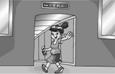



T: Here are some pictures. Now make sentences with the key words given below, using present continuous to show the future.
|
leave for
Disneyland this afternoon
travel to Canada
tomorrow come home in twenty minutes start at 7 o’clock go to Shanghai next week |
|
Picture1:
…is leaving for Disneyland this
afternoon. Picture2: …is travelling to Canada tomorrow. Picture3: …is coming home in twenty minutes. Picture4: …is starting at 7 o’clock. Picture5: …is going to Shanghai next week. |
2. (教师讲解进行时表将来的句式,并结合1c组织练习。)
(板书)
|
I’m leaving for Disneyland this afternoon. |
T: Boys and girls, look at the sentence on the blackboard. Then could you tell me what’s the
meaning of this sentence? Who can?
Ss: It means you will fly to Disneyland this afternoon.
T: Yes, that’s right.
(教师指导学生观察黑板上的句子,让学生给出更多例句。)
Step 1 Review 第一步 复习(时间:12分钟)
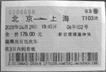
1. (教师出示一张飞机票的图片,导入本课语法和生词。)
T: Nice to see you again, class.
Ss: Nice to see you again, my dear teacher.
T: I’m sorry to tell you that I can’t have English classes for you next week. I’m leaving for Beijing to have an important meeting this weekend. It’s my plane ticket.
(板书)
|
I’m leaving for … |
Ss: Really? When are you leaving? (Mr. / Miss …, we want to see you off.)
T: My flight will take off at 7:00 p.m.. You needn’t see me off. If you have any difficulty in studying English, you can ask Mr. Hu for help. OK?
Ss: OK.
T: At the same time, try your best to get ready for next week’s exam. I hope you will have a victory in it.
(板书)
|
flight see sb. off have any difficulty (in doing…) victory |
(教师解释并领读,要求学生掌握victory。)
Ss: Thank you.
湖北省互联网违法和不良信息举报平台 | 网上有害信息举报专区 | 电信诈骗举报专区 | 涉历史虚无主义有害信息举报专区 | 涉企侵权举报专区
违法和不良信息举报电话:027-86699610 举报邮箱:58377363@163.com