
2. (再听一遍1a,然后要求学生表演对话。)
T: We’ve learnt the dialog well. Let’s go through it again, and then practice in pairs. Now who wants to act it out?
(此次表演可借助动作、合适的服装、道具,力求逼真。)
1. (让学生听1a录音,跟读模仿,然后分角色朗读。)
T: Please listen to 1a and read after it. Then act it out in roles.
3. (读1a,掌握表示建议的句子。)
T: Read 1a, and please pay attention to the sentences used for making suggestions.
(板书)
|
(1)
You should wear a suit. (2) You have to change your leather shoes. |
Step 3 Consolidation 第三步 巩固(时间: 5分钟)
巩固1a,完成1b。
2. (让学生听1a录音,回答下列问题。)
T: Let’s listen to the tape, then answer the questions below.
(用小黑板出示。)
|
(1) There are four different occasions. On the
first occasion, the man wears jeans. Is it suitable? (2) On the second occasion, what should we wear? (3) On the third occasion, what should we do when we enter someone’s home in Japan? (4) Do you think it’s suitable for a person to wear leather shoes when he is doing sports? |
1. (师生就不同场合的穿着情况问答,引出1a。如:)
T: When I go hiking, what should I wear? Can I wear a suit?
Ss: No. You should wear sportswear.
T: If we go to a party, what should we wear?
Ss: We should wear suits, leather shoes …
T: I think it’s important that we wear different clothes in different seasons and on different occasions. We should dress correctly.
2. T: Good. Now look at those sentences and tell me what you find.
(出示小黑板。)
|
Can
you tell me what I should wear here? Could you tell me where the special shoes are? I don’t know why. |
(教师讲解并分析结构。用彩笔画出what/where后的句子。引导学生注意从句的结构及句末的标点符号。)
(教师向学生们讲解规则,主要是训练学生变换句式结构的能力。)
T: OK! Let’s have a competition:“Add head ”. I will read out a sentence, then you have to add “Can you tell me” to complete the sentence, ready?
Ss: Yes.
T: Let’s go! Where should I stay?
S6: Can you tell me where I should stay?
T: When can the bus arrive?
S7: Can you tell me when the bus can arrive?
T: What should he do?
S8: Can you tell me …
(在比赛过程中同时以同样的方式练习“ I don’t know …” , “ Could you tell me …” 的句型。)
(在比赛过程中,以小组为单位发言,以又好又快为标准评出优胜小组。同时,纠正学生出现的错误。)
T: Well done! Congratulations to Group×!
(方案二)
1. (播放1a录音,完整听一遍,让学生对该对话有一个初步的理解;然后播放第二遍,这一次让学生带着问题听,且分段播放。)
T: Listen to 1a carefully, and get the main idea.
(听完一遍后,再听第二遍。)
T: Now listen to Dialog 1 of 1a again, and then answer the question:
What’s the second man wearing?
(“the second man”指的是第二个说话的男士。)
(听完录音,学生回答问题。)
S1: He is wearing jeans.
T: Well done! Now tell me what he should wear on that occasion.
S1: He should wear a suit.
(板书该句于第一步的 “You should …”后。)
T: Very good. Let’s go to Dialog 2.
(播放对话第二部分。)
T: Can you tell me what the man should wear?
S2: Yes. He should wear the special shoes.
T: How clever! What about Dialog 3?
(听第三段对话。)
T: What should you do when you enter someone’s home in Japan?
S3: We should take off our shoes.
T: Great!
(听第四段对话。)
T: What happened to Kangkang?
S4: His feet hurt.
T: What should he wear on that occasion?
S5: He should wear sports shoes.
T: Excellent! We’ve learned many sentences about suggestions in 1a. Can you find them?
Ss: Yes.
(板书“You should …”的句子,让学生齐读。)
|
You should wear
a suit. You should take off your shoes when you enter someone’s home in Japan. You should wear your sports shoes. |
1. (教师出示三幅图片。)
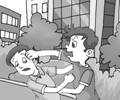
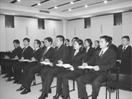
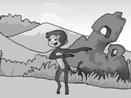
Picture1 Picture 2 Picture 3
(教师出示第一幅图片。)
T: Now look at the picture here. Do you think they are polite?
Ss: No. They’re impolite.
T: Yes, it’s impolite that they fight with each other. (教师可提示帮助学生答完后半句。)
(教师出示第二幅图片。)
T: Look at this one. What’s the monkey doing?
Ss: It’s performing ballet.
T: Is it funny?
Ss: Yes. It’s funny that a monkey performs ballet. (教师可提示帮助学生答完后半句。)
(教师出示第三幅图片。)
T: Where are they?
Ss: They are in a meeting room.
T: What are they wearing?
Ss: They’re wearing suits.
T: Right! Business suit. I think it’s suitable that people wear business suits to meet business partners.
(教师板书,并解释句子意思,讲解结构: It’s + adj. + that …)
 business
suit 商务套装 business
suit 商务套装 |
T: Now please make sentences according to the structure of the sentence.
(一分钟以后,教师让学生读出所造的句子。)
T: Show me your sentences, please.
S1: It is important that people keep quiet in a hospital.
S2: It is good that people do some exercise every day.
S3: It’s important that …
…
T: Well done!
(教师点评学生造的句子,表扬表现好的学生并鼓励其他学生。)
Step 2 Presentation 第二步 呈现(时间: 12分钟)
呈现本课活动1a。
(方案一)
2. (引入1a。)
T: I’m pleased with your homework. But does a doctor wear uniforms after work?
Ss: No.
T: So people should wear different clothes on different occasions.
(板书画线部分,让学生跟读句子。)
|
People should
wear different clothes on different occasions. |
T: That is to say, it’s important that you wear suitable clothes on every occasion.
(板书画线部分,让学生跟读句子。)
|
It’s important
that you wear suitable clothes on every occasion. |
(教师在黑板上贴上如下三幅图片。)
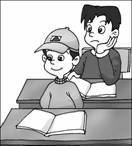
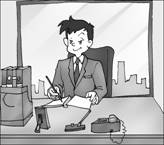
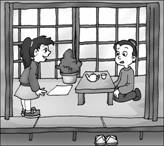
图1 图2 图3
T: OK, please look at the pictures on the blackboard. Then answer my questions.
T: Picture 1. Where is the student?
Ss: He is in the classroom.
(教师手指着图1中学生的帽子。)
T: What’s he wearing?
Ss: He is wearing a hat.
T: So we can say, it’s wrong that a student wears a hat in class.
(教师说出句子并板书画线内容,把这个句子写在It’s important …句子下面,以便归纳。)
|
It’s wrong that a student
wears a hat in class. |
T: Please give the student some suggestions.
(帮助学生用I think …回答。)
S1: I think he should take off his hat in class.
(板书画线部分,呈现于黑板的这句话是为下面课文练习作铺垫的。)
|
I think he should take off
his hat in class. |
T: What about next picture? Where is the man?
Ss: He is in the office.
T: What’s he wearing?
(教师手指图2中该男士所穿套装,并帮助学生回答。)
Ss: He is wearing a business suit. It’s suitable that he wears a business suit in the office.
(板书画线部分并解释生词,把该句写在同类句子下边,以便学生归纳。)
|
It’s suitable that he
wears a business suit in the office. |
T: Now look at this picture (Picture 3). Do you think where they are?
Ss: I think they are in Japan.
T: Can you tell me what the girl should do?
Ss: She should take off her shoes.
T: Right. You should take off your shoes when you enter someone’s home in Japan.
(板书画线部分,另选一处板书该句。)
|
You should take off your
shoes when you enter someone’s home in Japan. |
T: Now we know that we should dress correctly, is it right?
Ss: Yes, it’s right.
T: But if some people don’t know it, what will happen to them? Let’s listen to 1a carefully.
(自然过渡到下一步。)
(方案二)
Step 1 Review 第一步 复习(时间: 10分钟)
复习Section A 导入新课。
(方案一)
1. (检查作业,复习上节课内容。)
(1) (学生复述他们的采访内容。)
T: Boys and girls, you have interviewed one of your parents about the uniforms. Let’s share your ideas.
(对采访效果好的、有代表性的学生,可把他们的对话表演一遍以示鼓励。)
(2) (检查上节课学生设计校服的图片。)
T: Please show us the school uniform you designed yesterday.
(展示一些设计有特点的、有代表性的图片,把他们设计的服装张贴在学习园地,以示鼓励。)
湖北省互联网违法和不良信息举报平台 | 网上有害信息举报专区 | 电信诈骗举报专区 | 涉历史虚无主义有害信息举报专区 | 涉企侵权举报专区
违法和不良信息举报电话:027-86699610 举报邮箱:58377363@163.com