
3. - You don’t do some sports, do you?
- No, I ________, but now I ________ climbing mountains to keep fit.
A. used to; am used to B. am used to; used to
C. was used to; used to D. used to; used to
2. West Lake ________ on three sides ________ mountains with a lot of places of interest.
A. is surrounded; with B. is surrounding; with
C. is surrounding; by D. is surrounded; by
Ⅰ.单项选择。(15分)
1. So far a lot of tall buildings ________ in our city.
A. are built B. were built C. have built D. have been built
Ⅰ.听对话,选择与对话内容相符图片。每段对话读一遍。(5分)
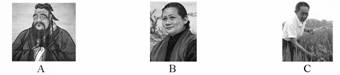 ( ) 1.
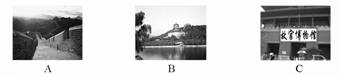
( ) 2.
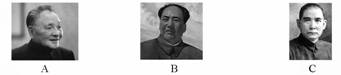 ( ) 3.
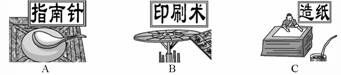 ( ) 4.
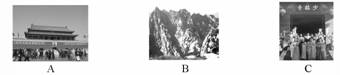
( ) 5.
Ⅱ.听句子,选择正确应答语。每个句子读一遍。(5分)
( ) 6. A. Scientists. B. Students. C. Tourists.
( ) 7. A. Tourists. B. Have a good day. C. Good idea.
( ) 8. A. Mao Zedong. B. Sun Yat-sen. C. Qin Shihuang.
( ) 9. A. They depended on stars.
B. They depended on the sun.
C. They depended on a compass.
( ) 10. A. It is made of metal. B. It was made of wood. C. They are made of metal.
Ⅲ.听对话,选择正确答案。每段对话读一遍。(5分)
( ) 11. A. Yes, she has. B. No, she hasn’t. C. Maybe.
( ) 12. A. Neither Wang Hong nor his sister came here.
B. Not only Wang Hong but also his sister came here.
C. Either Wang Hong or his sister came here.
( ) 13. A. Yes, she does. B. No, she doesn’t. C. I’m not sure of it.
( ) 14. A. The Qing dynasty. B. Sun Yat-sen. C. Sun Yat-sen and his men.
( ) 15. A. She planted trees. B. She picked apples. C. She visited farmers.
Ⅳ.听短文,补全句子。短文读两遍。(5分)
16. Yue Fei was born in ________.
17. His family was ________, but he was very ________.
18. Before Yue Fei’s tomb, there are ________ kneeling figures(塑像), and one of them was ________.
19. How do people like Yue Fei? They love him ________.
20. What can we learn from Yue Fei?
____________________________________________________
2. (按描述内容写一篇小作文。)
T: Put all the descriptions together to write a passage. You can begin like this:
China is a great country which has a lot of beautiful places and famous people …
1. (学生拿出课前准备好的名胜和名人图片向同伴描述图片,并让他/她猜一猜,然后交换角色。)
T: Describe each picture and ask your partner to guess where it is and who he/she is. Then change your roles.
2. (要求学生合上书,归纳总结一下本话题中的有用表达。)
T: Now, my class, please close your books and sum up useful expressions in this topic. OK?
Ss: OK.
(几分钟后)
T: Now, let’s stop here. Volunteers? Hands up!
(然后学生逐个总结,完成4b。)
Step 5 Project 第五步 综合探究活动(时间:7分钟)
通过谈论图片与写作,完成5。
1. (教师将学生分为四组,每组到黑板上写由关系代词引导的定语从句,所写句子不能相同,且一定要用到每个代词。)
T: Now, my class. Let’s have a competition. Each group writes the sentences using attributive clauses as many as possible. OK?
Ss: OK.
T: Ready? One, two, three, go!
|
GA GB GC GD (1) ... ... ... ... (2) ... ... ... ... (3) ... ... ... ... ... |
(写的又多又正确的组为赢者,给予奖励。)
T: OK. Well done, everyone. GD is the winner, congratulations!
3. (进行4a。让学生跟读磁带,注意who, whose, whom在从句中的用法。)
T: Listen to the tape and read after it.
Step 4 Practice 第四步 练习(时间:10分钟)
复习巩固由关系代词引导的定语从句,并完成4b。
2. (用连句子的方法来巩固定语从句。)
T: Now everyone. Please match the sentences with “that, which, whose, who or whom”. First look at the example.
(板书,并领读。)
|
I know the girl in green who/whom
John is talking to. Confucius is the great man whose sayings are still very famous. |
T: OK. Can you match the following sentences?
Ss: Yes, we can.
T: Good.
|
(1) The foreigner visited our school
yesterday. The foreigner is from Canada. (2) They planted the trees. The trees don’t need too much water. |
Answers: (1)The foreigner who visited our school yesterday is from Canada.
(2)We planted the trees which don’t need too much water.
湖北省互联网违法和不良信息举报平台 | 网上有害信息举报专区 | 电信诈骗举报专区 | 涉历史虚无主义有害信息举报专区 | 涉企侵权举报专区
违法和不良信息举报电话:027-86699610 举报邮箱:58377363@163.com