
3. (让学生读出对话中孔子的一句名言并译成汉语。)
T: I’ll ask one student to read the saying of Confucius in the dialog and another translate it.
S6: He who learns but does not think is lost; he who thinks but does not learn is in danger.
S7: 学而不思则罔;思而不学则殆。
(方案二)
学习1a并通过回答问题加深对1a的理解。
2. (听录音,学生跟读,进一步记忆有关孔子的关键句。)
T: Listen to the tape carefully and read after it. Try to remember the key sentences about Confucius.
1. (以听力的形式呈现1a,并找出介绍孔子的关键句。)
T: We’ve talked something about Confucius. Do you want to know more about him? Now let’s learn a dialog that introduces Confucius. Listen to the tape and find some key sentences about him.
(听录音)
S1: Confucius, a pioneer in the field of education.
S2: He was born in the year 551 B.C.
S3: He was a great thinker who had many wise ideas and thoughts about nature and human behavior.
S4: He was also a famous philosopher whose wise sayings have influenced many people in different countries.
S5: ...
2. (教师展示孔子图和孔子讲学图,并进一步对孔子进行介绍,引出定语从句: He was a great thinker who had many wise ideas and thoughts about nature and human behavior.)
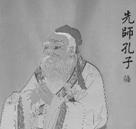
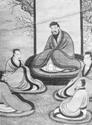
T: Let’s learn something about Confucius. He was born in the year 551 B.C. He was a pioneer in the field of education. He was also a famous philosopher.
(板书)
|
He was a great thinker who had many
wise ideas and thoughts about nature and human behavior. |
(教师对who引导的定语从句进行必要的讲解,并且要提到that和who引导的定语从句的共同点,并举例。)
|
(1)He is the man that I want to
meet. (2)I like the teacher who can play with us. |
Step 2 Presentation 第二步 呈现(时间:6分钟)
学习1a。
(方案一)
Step 1 Review 第一步 复 习(时间:20分钟)
教师用常见的谚语和孔子名言呈现并介绍孔子,引出定语从句。
1. (教师收集一些名言和谚语,让学生分组进行翻译,以竞赛的形式完成。其中要包含关于孔子的名言和谚语,便于呈现孔子。)
步骤:(1)教师分组,两人一组。
(2)把事先准备好的名言和谚语发给每组,每组两条名言和谚语,一条英译汉,一条汉译英。
(3)做好的交给教师,教师检查并对好的进行表扬。
(4)把所有名言和谚语用小黑板展示,让学生选择两条自己最喜欢的速记。
(5)把自己喜欢的名言和谚语说给同伴听。
(6)教师选择孔子的名言和谚语,呈现孔子,并进行简单的介绍,呈现who引导的定语从句。
T: Let’s have a competition. Work in pairs. I have some sentences on these paper. Please translate them with your partner. Let’s begin.
(教师搜集的名言和谚语可参考下面小黑板呈现的内容,进行英汉转化。)
T: OK, let’s look at your translations together. Group1…
(教师把收集的名言和谚语以小黑板的形式展示出来。)
T: Look at the small blackboard. Here are some sayings. From No. 5 to No. 8 are Confucius’ sayings.
 (1)Two heads are better than
one. (1)Two heads are better than
one.
(3)Love me, love my dog. (4)Where there is a will, there is a way. (5)When I walk along with two others, I may be able to learn from them. (6)What you know, you know; what you don’t know, you don’t know. (7)He who learns but does not think is lost; he who thinks but does not learn is in danger. (8)Isn’t it a pleasure that friends come to see you from far away? (9)Learn the new while reviewing the old. |
T: Which is your favorite? Can you tell me?
S1: …
S2: …
S3: …
(教师总结并引出Confucius。)
T: Do you know about Confucius? Confucius was a pioneer in the field of education. He was also a famous philosopher.
(板书并领读。)
|
Confucius 孔子 pioneer n.先驱 philosopher n.哲学家 Confucius was a pioneer in the field of education. He was also a famous philosopher. |
录音机/教学图片/多媒体课件
4. Let the students learn about Chinese culture, and improve the sense of national pride.
3. Talk about historical people and historic events of China.
2. Learn attributive clauses which use“who”and“whose”.
(1)He was a great thinker who had many wise ideas and thoughts about nature and human behavior.
(2)He was also a famous philosopher whose wise sayings have influenced many people in different countries.
1. Master the new word and phrase:
pioneer, spend…(in) doing
湖北省互联网违法和不良信息举报平台 | 网上有害信息举报专区 | 电信诈骗举报专区 | 涉历史虚无主义有害信息举报专区 | 涉企侵权举报专区
违法和不良信息举报电话:027-86699610 举报邮箱:58377363@163.com